
How do I clean and care for Swedish Dishcloths?Updated 2 months ago
TL;DR: Rinse and wring Swedish Dishcloths after every use, then air-dry them flat. Sanitise on the dishwasher top rack, in boiling water for 2 to 3 minutes, or at 30°C. Skip bleach, fabric softener and the tumble dryer. Expect up to 3 months per cloth.
How do I clean and care for Swedish Dishcloths?
After every use
Rinse thoroughly. Run it under the tap until the water runs clear.
Wring out the excess. Squeeze gently rather than twisting hard.
Air-dry flat or hung. Never leave it scrunched up in the sink.
Why drying matters most
Odour is almost always trapped moisture rather than a worn-out cloth. A cloth that dries fully between uses stays fresh for weeks. One left sitting damp will start to smell within days.
How do I sanitise a Swedish Dishcloth?
Dishwasher
Place the cloth on the top rack and run a normal cycle. The easiest option if the dishwasher is going anyway.
Boiling water
Submerge the cloth in boiling water for 2 to 3 minutes, then lift it out and air-dry it flat.
Machine wash
Wash at 30°C on a gentle cycle with your regular laundry and Sensitive Laundry Sheets. Sanitise weekly for a daily-use cloth.
What should I keep away from them?
⚠ Never use bleach or fabric softener
Bleach weakens the cellulose fibres and shortens the cloth’s life. Fabric softener coats the fibres and stops them absorbing, which is the most common reason a cloth suddenly stops working.
⚠ Do not tumble dry
Heat from a tumble dryer damages the fibres and distorts the shape. Lay the cloth flat or hang it and let it dry on its own.
When should I replace one, and how do I dispose of it?
Time to replace when
It is thinning or tearing. Cellulose fibres break down naturally with use.
Absorbency has dropped. And a proper rinse or sanitise has not brought it back.
Around 3 months have passed. That is the expected life with regular use.
At end of life
The cloth is 100% compostable and biodegradable and breaks down naturally within about 24 weeks. Cut it into strips and add it to a home compost bin or garden waste collection. It contains no plastic fibres, so it does not belong in kerbside recycling.
Where can I read more about Swedish Dishcloths?
What they are and how to use them
Materials, absorbency, and the three-step routine for everyday cleaning. Read the basics
Safe surfaces
Every surface a Swedish Dishcloth is safe on, plus the finishes worth spot-testing first. See the surface list
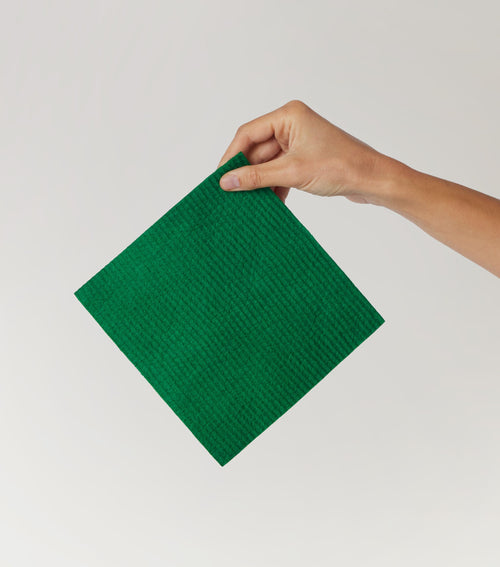
4-pack. Replaces paper towels, single-use wipes and synthetic sponges. Up to 3 months per cloth.
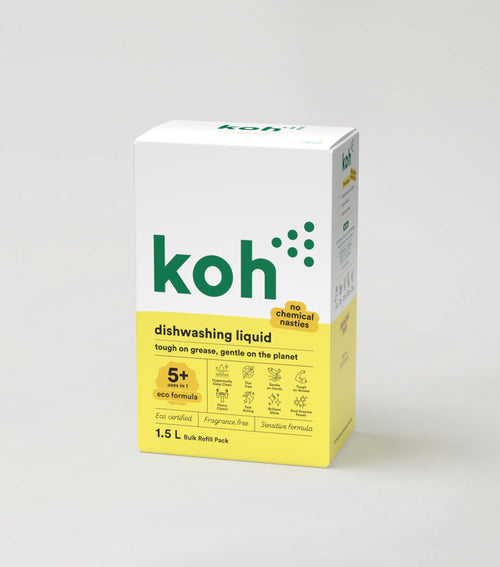
The natural pairing for dishes, glassware and greasy cookware.
Browse all Swedish Dishcloths articles
Last reviewed: August 2026 · Koh UK