
Is Kitchen Grease & Oil Cleaner safe on stainless steel?Updated 17 hours ago
TL;DR: Yes. Kitchen Grease & Oil Cleaner is safe on stainless steel appliances, cooktops, rangehoods, splashbacks, and BBQs. Spray, wipe in the direction of the grain with a soft cloth like a Swedish Dishcloth, rinse, then buff dry with a clean cloth for a streak-free finish. Scrubby Pads are fine on brushed stainless with light pressure. Skip Diamond Sponges and steel wool on polished or mirror-finish stainless, they can leave fine scratches.
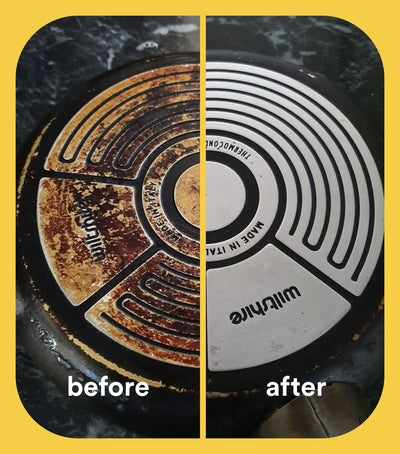
How do I use it on stainless steel?
✓ The streak-free method
Spray. Spray Kitchen Grease & Oil Cleaner onto the surface, or onto a Swedish Dishcloth first for controlled application on small areas.
Wipe. Wipe with a soft cloth in the direction of the grain (the fine lines you can see in the steel).
Rinse. Rinse the surface with clean water.
Buff. Buff dry with a clean, dry cloth to finish streak-free.
✓ Why the grain matters
Stainless steel has a directional grain, the fine lines you can see in the surface. Wiping with the grain lifts grease and marks cleanly. Wiping across or against it can trap residue in the fine grooves and leave streaks or a hazy finish.
What tools should I use or avoid?
✓ Safe on both finishes
Soft cloths like Swedish Dishcloths and non-abrasive Dish Sponges. Always wipe with the grain.
✓ Brushed stainless: Scrubby Pads OK
For heavier buildup on brushed stainless (most modern fridges, ovens, dishwashers, BBQs), Scrubby Pads are fine with light pressure and always with the grain. The brushing pattern hides minor friction marks. Test first if unsure.
⚠ Polished stainless: stick to soft cloths
Skip Scrubby Pads, Diamond Sponges, and steel wool on polished or mirror-finish stainless (some sinks, decorative trim, commercial equipment). Scratches show clearly and don't buff out.
Why is it leaving streaks on my stainless?
✓ Use less product
Too much product leaves residue. For small areas, spray onto a Swedish Dishcloth first, then apply.
✓ Wipe with the grain
Wiping across or against the grain traps residue in the fine grooves of the steel. Always wipe in the direction of the lines.
✓ Rinse and buff dry
Skipping the rinse and dry steps is the most common cause of streaks. Always rinse with clean water and buff dry with a clean cloth (a microfibre or fresh Swedish Dishcloth works well). For stubborn water spots, a quick wipe with white vinegar after rinsing helps.
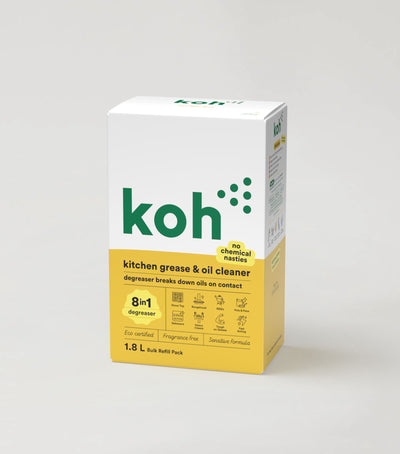
Safe on stainless steel appliances, cooktops, rangehoods, and BBQs. Dermatest tested. Septic safe.
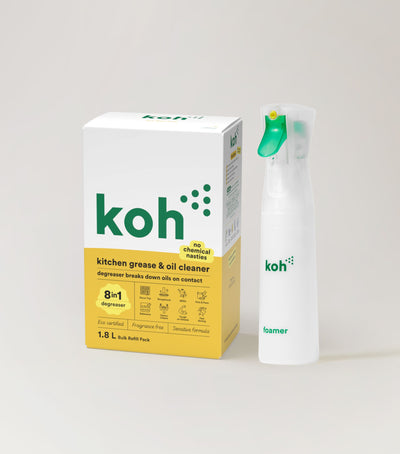
Kitchen Grease & Oil Cleaner Starter Kit · new at Koh?
Includes Kitchen Grease & Oil Cleaner plus a Foaming Spray Bottle. Spray foam, wait, scrub, rinse.
Browse all Kitchen Grease & Oil Cleaner articles
Last reviewed: July 2026 · Koh UK