
What are Swedish Dishcloths & how do I use them?Updated 2 months ago
TL;DR: Swedish Dishcloths are 70% cellulose and 30% cotton. Wet the cloth under the tap until it softens, wring it out, then wipe like a sponge or paper towel. Pair with Dishwashing Liquid for dishes, or Universal Cleaner for worktops and splashbacks.
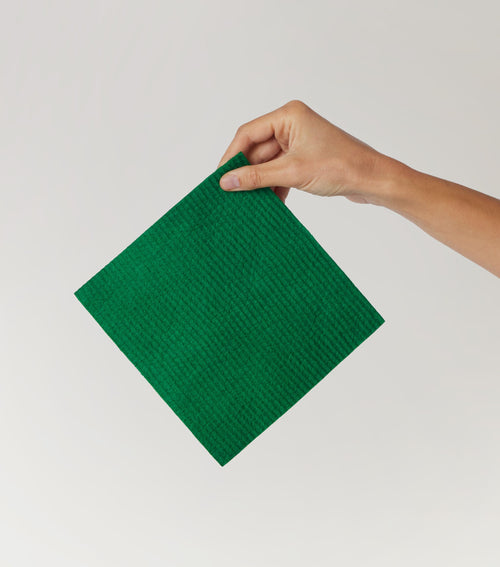
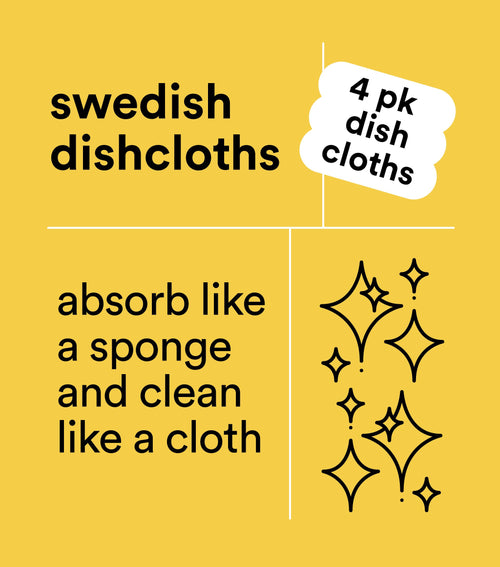
What are Swedish Dishcloths made of?
What they are made from
70% cellulose, 30% cotton. No synthetic fibres and no microfibre, so nothing sheds microplastics into your sink. Certified to OEKO-TEX 100 for skin-safe materials. Made in Germany, dyed in China.
What one cloth replaces
Paper towels, single-use wipes and synthetic sponges. A Swedish Dishcloth absorbs up to 15 times its own weight, wipes worktops, and polishes glass without streaking. A 4-pack is roughly a year of cloths if you rotate through the set.
How do I use Swedish Dishcloths?
Three steps
Wet the cloth. Run it under the tap until it softens. Stiff when dry is normal.
Wring it out. Squeeze out the excess so it is damp, not dripping.
Wipe and rinse. Wipe the surface, rinsing and wringing as you go.
Where it works
Worktops, splashbacks, hobs, sinks, appliance exteriors, glass and spills. It soaks up liquid mess, wipes greasy splatter, and polishes streak-free.
Which Koh cleaners pair best with Swedish Dishcloths?
Dishes, glassware and greasy cookware. Concentrated formula, gentle on hands.
Tough kitchen messes. Hobs, splashbacks, extractor hoods and baked-on worktop residue.
Sealed hard surfaces around the home. Streak-free finish on glass, tile and worktops.
Where can I read more about Swedish Dishcloths?
Cleaning and care
How to rinse, dry and sanitise a cloth, what to keep away from it, and when to replace it. Read the care guide
Safe surfaces
Every surface a Swedish Dishcloth is safe on, plus the finishes worth spot-testing first. See the surface list
4-pack. Replaces paper towels, single-use wipes and synthetic sponges. Up to 3 months per cloth.
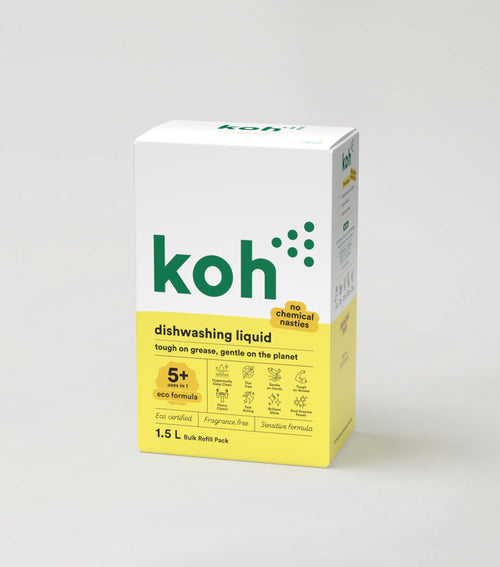
The natural pairing for dishes, glassware and greasy cookware.
Browse all Swedish Dishcloths articles
Last reviewed: August 2026 · Koh UK