
Koh UK  logo
Koh UK  logo

All articles

Which surfaces can I use Diamond Sponges on?Updated 6 hours ago

TL;DR: Diamond Sponges work best on tough, hard surfaces like oven walls, grout, stone, cast iron and stained pots. Spot test glazed tile and matte finishes in a hidden area first. Never use on glass, chrome, polished stainless, plastic, acrylic or non-stick coatings.
Read on ↓

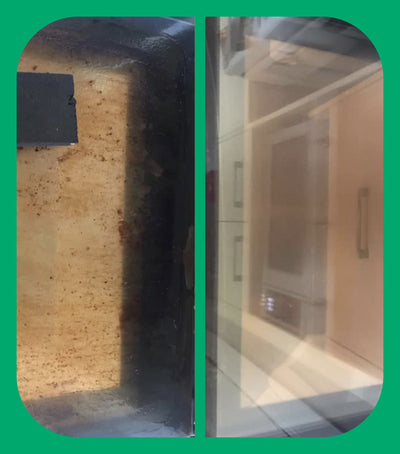
Koh Diamond Sponge before and after
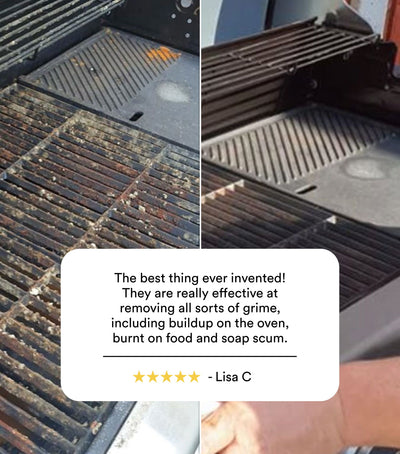
Koh Diamond Sponge on a tough job

Which surfaces can I use Diamond Sponges on?

Diamond Sponges are safe on oven walls, racks, trays, drip pans, cooktop trivets, burner caps, tile grout, stone pavers, brick BBQ surrounds, heavily stained pot interiors, cast-iron pans and steel BBQ grates. Stick to tough, hard, non-polished surfaces where the abrasive grit can do its work without risking the finish. Glazed tile and glossy ceramic are not in this group, spot test those first. Always spot test any new surface in a hidden corner with the lightest pressure before you commit, because abrasion damage cannot be undone.

⚠ Spot test first, every time

Before a Diamond Sponge touches any surface for the first time, test it in a hidden corner with the lightest pressure. Stop immediately if you see dulling, scratching or any change in finish. Abrasion damage cannot be undone.

Hidden corner Lightest pressure Damage is permanent

✓ Oven and cooktop

Oven walls, racks, trays and drip pans. Cooktop trivets, burner caps and grates. Baked-on grease and carbonised residue. Skip the glass oven door and ceramic hobs.

Oven walls Racks and trays Trivets

✓ Tough, non-polished surfaces

Tile grout, stone pavers and brick BBQ surrounds. Heavily stained pot interiors, cast-iron pans and steel BBQ grates. Pair with Universal Cleaner for the lifting work, and see how to use Diamond Sponges for technique.

Grout Stone pavers Cast iron BBQ grates

Which surfaces need a spot test first?

Spot test on glazed tile, glossy ceramic, porcelain, hard-anodised cookware, unglazed ceramics, matte natural stone, concrete, and satin or brushed metal finishes. Pressure and angle matter. Too firm and these surfaces can dull, scratch or mark. Test Diamond Sponge in a hidden corner first with light pressure, and stop immediately if the finish changes. Glazed and high-gloss finishes are not recommended.

⚠ Glazed tile and glossy ceramic

The abrasive coating can dull or scratch glazed ceramic tile, porcelain and glossy finishes. Not recommended on high-gloss surfaces. If you try it, spot test a hidden area first with the lightest pressure.

Spot test first Risk of dulling Not on high-gloss

⚠ Matte, unglazed and brushed metals

Hard-anodised cookware, unglazed ceramic, matte stone and concrete can mark under firm pressure. Brushed steel and satin finishes can swirl if the abrasive runs across the grain, so work with the brush lines.

Hard-anodised Matte stone Work with the grain

Which surfaces should I never use Diamond Sponges on?

Never use Diamond Sponge on glass, mirrors, ceramic hobs, chrome, polished stainless steel, copper, brass, plastic, acrylic or fibreglass. These finishes will scratch permanently. Soft metals and coated surfaces like painted walls, polished timber, non-stick cookware and enamel are also off-limits. Swap to a soft cloth or sponge for those jobs.

⚠ Scratch-prone finishes

Glass, mirrors, ceramic hobs, chrome taps, polished stainless appliance exteriors, copper pots and brass fixtures will all scratch under the abrasive coating.

No glass No chrome No polished stainless

⚠ Soft and coated surfaces

Plastic, acrylic, fibreglass bath tubs, painted walls, polished timber, non-stick cookware coatings and enamel. Soft finishes mark instantly and coatings peel. Reach for a soft cloth or sponge on those jobs.

No plastic No non-stick No painted surfaces

Why the coating behaves this way

The abrasive is a bonded silica alumina film over a high-density PU foam core, which is harder than most household finishes. See what Diamond Sponges are made of.

Silica alumina PU foam core

A worn sponge is gentler, not safe

As the coating wears smooth it loses bite, but it is still abrasive and the never-use list still applies. See how long Diamond Sponges last.
Still abrasive Same no-go list

Koh Diamond Sponges 4pk

Diamond Sponges

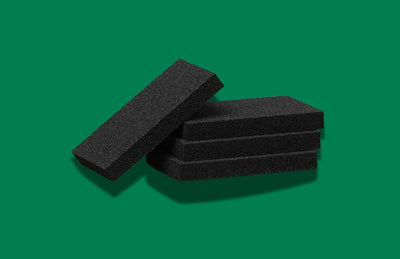
4-pack. For oven walls, grout, stone, cast iron and stained pots. High-density PU foam with a silica alumina coating.
Koh Bathroom & Shower Cleaner 1.8L

Bathroom & Shower Cleaner

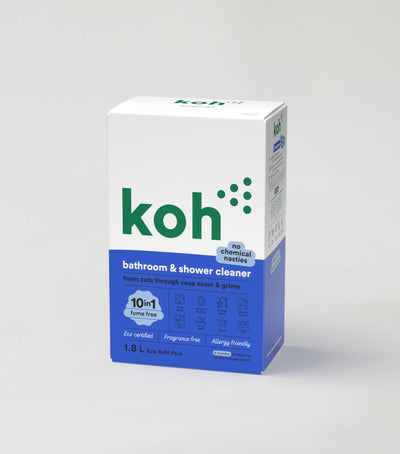
For the bathroom surfaces a Diamond Sponge should never touch. Acrylic baths, chrome and glass screens need a cleaner and a soft cloth instead.

Browse all Diamond Sponge articles

Last reviewed: August 2026 · Koh UK

diamond sponge surfaces, diamond sponge safe on, diamond sponge safe surfaces, diamond sponge where to use, diamond sponge can i use on, diamond sponge oven, diamond sponge oven walls, diamond sponge oven racks, diamond sponge oven trays, diamond sponge drip pans, diamond sponge cooktop, diamond sponge trivets, diamond sponge burner caps, diamond sponge bbq, diamond sponge bbq grates, diamond sponge cast iron, diamond sponge steel grates, diamond sponge grout, diamond sponge tile, diamond sponge glazed tile, diamond sponge glossy ceramic, diamond sponge stone pavers, diamond sponge brick, diamond sponge concrete, diamond sponge pots, diamond sponge burnt pot, diamond sponge stained pot, diamond sponge spot test, diamond sponge hard anodised, diamond sponge unglazed ceramic, diamond sponge matte stone, diamond sponge brushed steel, diamond sponge satin finish, diamond sponge swirl marks, diamond sponge avoid, diamond sponge never use, diamond sponge glass, diamond sponge mirror, diamond sponge ceramic hob, diamond sponge chrome, diamond sponge chrome tap, diamond sponge polished stainless, diamond sponge copper, diamond sponge brass, diamond sponge plastic, diamond sponge acrylic, diamond sponge fibreglass, diamond sponge bath tub, diamond sponge painted wall, diamond sponge polished timber, diamond sponge non stick, diamond sponge enamel, can i use diamond sponge on glass uk, can i use diamond sponge on stainless steel uk, what surfaces can i use diamond sponge uk

Was this article helpful?
Yes
No