
Which surfaces can I use Swedish Dishcloths on?Updated 2 months ago
TL;DR: Swedish Dishcloths are non-abrasive and safe on stainless steel, glass and mirrors, ceramic and porcelain, sealed stone and laminate worktops, sealed timber and appliance exteriors. Wring the cloth well and spot-test painted finishes, unsealed stone and unsealed timber first.
Which surfaces can I use Swedish Dishcloths on?
Safe on
Stainless steel. Non-abrasive fibres will not scratch. Rinse residue off afterwards.
Glass and mirrors. Streak-free damp with plain water or a glass cleaner.
Ceramic and porcelain. Ideal for sinks and tile. Will not etch glazes.
Also safe on
Sealed stone and laminate worktops. Use a mild detergent and skip harsh scouring.
Sealed timber. Wring the cloth well so it is damp, not wet.
Appliance exteriors and microwave interiors. Soft enough for glass and painted panels.
Which surfaces should I be careful with?
⚠ Spot-test these first
Painted cabinets, freshly painted walls, unsealed stone and unsealed timber. Wring the cloth until it is barely damp, then try an inconspicuous area before doing the whole surface.
⚠ The cleaner matters more than the cloth
Swedish Dishcloths are non-abrasive, so what limits where you can use one is usually the product you pair it with. Check that cleaner’s own surface guidance before you start.
Which cleaner should I pair with each surface?
Dishes, glassware and greasy cookware. Concentrated formula, gentle on hands.
Tough kitchen messes. Hobs, splashbacks, extractor hoods and baked-on worktop residue.
Sealed hard surfaces around the home. Streak-free finish on glass, tile and worktops.
Where can I read more about Swedish Dishcloths?
What they are and how to use them
Materials, absorbency, and the three-step routine for everyday cleaning. Read the basics
Cleaning and care
How to rinse, dry and sanitise a cloth, and when to replace it. Read the care guide
4-pack. Replaces paper towels, single-use wipes and synthetic sponges. Up to 3 months per cloth.
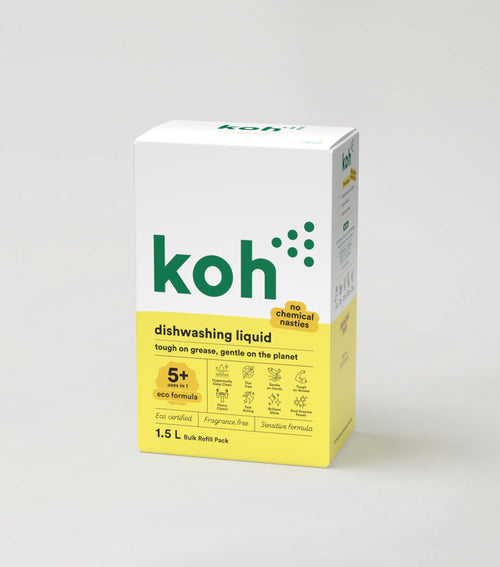
The natural pairing for dishes, glassware and greasy cookware.
Browse all Swedish Dishcloths articles
Last reviewed: August 2026 · Koh UK