Does Universal Cleaner kill bacteria and viruses?Updated 4 days ago
TL;DR: No. Universal Cleaner is a cleaner, not a sanitiser or disinfectant. It lifts grease, food residue, and the soil that microbes live in so they rinse away, which removes them rather than killing them. It isn’t registered under the UK Biocidal Products Regulation and won’t kill viruses. If you need a kill step, clean first, then use a registered disinfectant carrying EN 1276 for bacteria or EN 14476 for viruses.
Does Universal Cleaner kill bacteria?
✓ How Universal Cleaner works
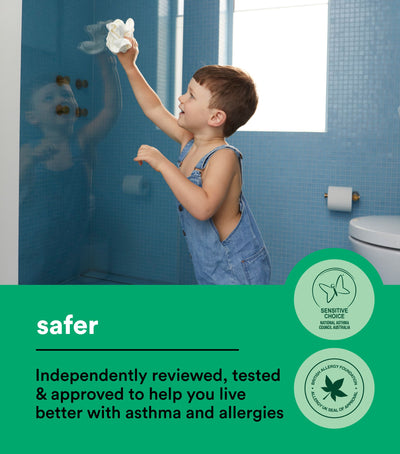
No. Universal Cleaner is a surface cleaner, not a sanitiser or disinfectant, and it makes no antibacterial claim. It lifts grease, food residue, and the organic soil that bacteria live in, so they come away on your cloth and rinse down the sink. That is removal, not a kill. Clean thoroughly and rinse well after raw meat or on high-touch surfaces. If you need bacteria killed, clean first, then use a registered disinfectant carrying EN 1276 certification.
Does Universal Cleaner kill viruses?
⚠ Not a sanitiser or disinfectant
No. Universal Cleaner is a surface cleaner, not a virucide. It isn’t registered as a sanitiser or disinfectant under the UK Biocidal Products Regulation and won’t kill viruses like colds, flu, or COVID-19. For virus elimination, reach for a dedicated disinfectant carrying EN 14476 virucidal certification.
What’s the difference between cleaning and disinfecting?
✓ Clean first with Universal Cleaner
Cleaning removes the grease, food residue, dirt, and organic matter that bacteria and viruses shelter in. Universal Cleaner lifts that soil so it rinses away, and leaves the surface ready for a disinfectant if you need one.
✓ Disinfect after with a registered product
Disinfecting chemically kills the pathogens left on a pre-cleaned surface. Registered UK disinfectants carry EN 1276 for bacterial activity or EN 14476 for virucidal activity. Disinfectants work best on a clean surface, so the order matters.
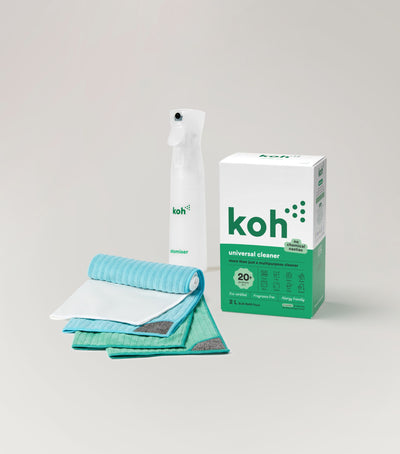
Pairs a box of Universal Cleaner with Atomiser Spray Bottle and General Cloths 3pk. Everything you need to start.
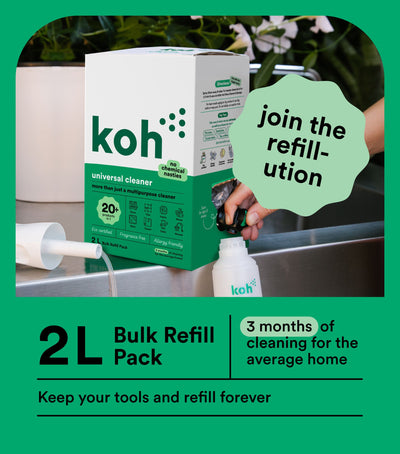
2L bag-in-box refill. The same two-ingredient formula in our most popular size. Approximately 3 months of cleaning for the average UK home.
Browse all Universal Cleaner articles
Last reviewed: August 2026 · Koh UK